Understanding “Rights Police Don’t Want You to Know” PDFs
These documents, circulating since 2026, promise legal loopholes and “secret rights,” gaining traction through platforms like YouTube and online forums. They offer a false sense of empowerment,
The Core Claims & Origins
The “Rights Police Don’t Want You to Know” PDFs assert individuals possess inherent rights beyond conventional legal understanding, often rooted in obscure interpretations of Common Law and UCC (Uniform Commercial Code) filings. These documents typically claim that birth certificates are actually corporate trust accounts, effectively making individuals “straw men” controlled by the government. They allege that police lack legitimate authority unless explicitly consented to, and that citizens can “checkmate” the system by exploiting perceived flaws in legal processes.
Origins trace back to the Sovereign Citizen movement, gaining momentum online around 2024-2025. Early iterations appeared on fringe websites and forums, later amplified through YouTube videos promising financial freedom and legal immunity. The PDFs themselves are often compilations of legal-sounding jargon, selectively quoted statutes, and conspiracy theories. They present a narrative of systemic oppression and offer a DIY legal toolkit for resisting authority, attracting individuals disillusioned with traditional institutions. The content frequently references maritime law, incorrectly applying it to terrestrial legal matters, and promotes the idea of “redemption” through UCC filings.
The Spread of the Information via YouTube & Online Forums

YouTube has been a primary vector for disseminating “Rights Police Don’t Want You to Know” PDF content, with numerous channels dedicated to explaining and promoting their concepts. Videos often feature charismatic personalities presenting the information as groundbreaking legal discoveries, attracting viewers seeking alternatives to conventional legal advice. Search algorithms, initially, boosted visibility, further accelerating the spread. Online forums, particularly those focused on conspiracy theories and alternative lifestyles, also serve as hubs for sharing and debating the PDFs’ claims.
The Sunflower performers’ history, starting with early YouTube uploads, exemplifies the platform’s role in fostering online communities. These platforms allow users to connect, share experiences, and reinforce beliefs. The ease of content creation and sharing on YouTube, coupled with the echo chamber effect of online forums, has created a self-perpetuating cycle of misinformation. The official YouTube app’s accessibility on various devices contributes to the widespread reach, while the search function aids in discovering related content, solidifying the PDFs’ presence in the digital landscape.
Common Themes: Sovereign Citizen Ideology
A core tenet underpinning the “Rights Police Don’t Want You to Know” PDFs is a strong alignment with sovereign citizen ideology. This belief system rejects the legitimacy of government authority, asserting that individuals are exempt from laws they haven’t personally consented to. The PDFs frequently promote the idea of a “straw man” – a legal fiction created at birth that individuals can supposedly disavow to free themselves from legal obligations.
This rejection of governmental authority extends to financial systems, with proponents often attempting to utilize obscure Uniform Commercial Code (UCC) filings to discharge debts or claim ownership of assets. The PDFs draw heavily on misinterpreted legal concepts, including maritime law, applying them inappropriately to terrestrial legal frameworks. YouTube’s role in amplifying these ideas, alongside online forums, has fostered a community where these beliefs are reinforced and disseminated, creating a network of individuals sharing and promoting these unconventional legal theories.
Debunking Legal Misconceptions within the PDFs
The legal arguments presented in these “Rights Police Don’t Want You to Know” PDFs are fundamentally flawed and consistently rejected by courts. The “straw man” argument, central to their claims, lacks any basis in established legal precedent. Courts consistently recognize individuals as legally responsible for their actions, regardless of any purported disavowal of a “straw man” persona.
Similarly, the application of UCC filings for debt discharge or asset claims is legally invalid. UCC filings are intended for securing commercial transactions, not for circumventing legal obligations. The misinterpretation of maritime law, attempting to apply admiralty principles to everyday legal matters, is also demonstrably incorrect. These documents often cherry-pick legal language, distorting its meaning and context to support pre-determined conclusions. Relying on these PDFs can lead to significant legal setbacks and wasted resources, as courts routinely dismiss arguments based on these theories.

Analyzing the Legal Arguments Presented
These PDFs rely on convoluted legal theories, including the “straw man” concept, redemption theory, and misapplied UCC filings, all lacking legitimate legal standing or court validation.
The “Straw Man” Argument Explained
The “straw man” argument, central to these PDFs, posits that upon birth, a separate legal entity – a “straw man” – is created by the government, represented by your name in all capital letters. Proponents claim this entity is used for financial control, and that individuals can “reclaim” their true selves by severing ties with this fictional persona.
This theory suggests that all legal documents, debts, and interactions are actually with the “straw man,” not the living person. The supposed solution involves complex procedures like UCC filings and “notice of understanding and demand,” aiming to separate the individual from the perceived legal fiction. However, this is a fundamental misinterpretation of legal principles.
Legally, your name, whether in uppercase or lowercase, simply identifies you as an individual. There is no separate legal entity created at birth. Courts consistently reject arguments based on the “straw man” theory, deeming them frivolous and lacking legal basis. Attempting to use these arguments in legal proceedings can result in sanctions and wasted time.
Redemption Theory & UCC Filings: A Detailed Look
“Redemption Theory,” heavily promoted within these PDFs, builds upon the “straw man” concept, claiming the US government holds a secret trust account for every citizen, funded by their birth certificate. Proponents believe individuals can access these funds by filing specific Uniform Commercial Code (UCC) documents.
UCC filings are legitimate legal tools used to establish security interests in personal property. However, these PDFs misapply them, suggesting they can be used to “discharge” debts or claim government funds. The process typically involves filing UCC-1 forms with a Secretary of State, often accompanied by complex, self-authored declarations.
This is entirely based on pseudolegal arguments. UCC filings are not a substitute for legal debt resolution. Courts consistently dismiss attempts to use them for this purpose. Furthermore, the claim of secret government trust accounts is demonstrably false. These schemes often prey on vulnerable individuals, promising financial freedom through convoluted and ultimately ineffective procedures.
The Misinterpretation of Maritime Law
A recurring theme within the “Rights Police Don’t Want You to Know” PDFs is the erroneous application of maritime law – laws governing navigable waters – to everyday land-based interactions. Proponents argue that birth certificates transform individuals into “vessels” subject to admiralty jurisdiction, believing this unlocks loopholes to avoid legal obligations.
This interpretation stems from a fundamental misunderstanding of legal frameworks. While the US legal system has roots in maritime law, it doesn’t apply universally to citizens on land. The claim that using all-caps in legal documents signifies you are speaking as a “sovereign” or “vessel” is entirely without legal basis.
Courts routinely reject arguments based on this misapplication of maritime law. The PDFs often cite obscure legal definitions and historical precedents, twisting them to support their claims. This tactic aims to confuse and overwhelm legal professionals, but ultimately fails to hold up under scrutiny. It’s a pseudolegal argument with no grounding in reality.

Impact and Consequences of Using These Documents
Attempting to utilize these PDFs can lead to legal trouble, strained interactions with law enforcement, and potential financial exploitation through associated scams and services.
Potential Legal Repercussions
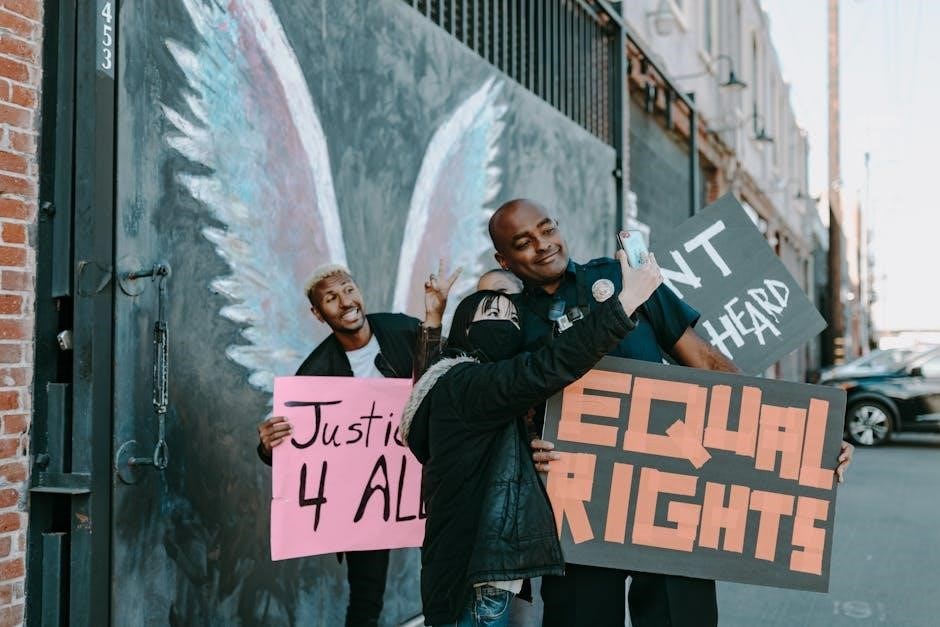
Individuals attempting to leverage arguments presented in these “Rights Police Don’t Want You to Know” PDFs face significant legal risks. Presenting these documents to law enforcement, or citing their claims in court, is highly unlikely to be successful and could actively harm your legal position. Authorities are well-versed in these tactics, stemming from sovereign citizen ideology, and view them with skepticism, often interpreting such actions as obstruction or resisting arrest.

Furthermore, attempting to avoid legal processes based on these flawed theories can result in additional charges, including contempt of court. Misrepresenting legal authority or filing frivolous claims – like UCC filings – can lead to sanctions and financial penalties; The core arguments within these PDFs lack legal basis and are consistently rejected by the judicial system. Relying on them demonstrates a misunderstanding of the law and can severely prejudice your case, potentially leading to harsher sentencing or further legal complications. It’s crucial to understand these documents offer a false sense of legal protection.

Interactions with Law Enforcement
Presenting “Rights Police Don’t Want You to Know” PDFs during encounters with law enforcement is strongly discouraged and can escalate situations. Officers are trained to recognize arguments rooted in sovereign citizen ideology, which these documents heavily promote. Attempting to cite these claims often leads to increased scrutiny and may be perceived as non-compliance or even hostility.
Such interactions can quickly transform from routine to confrontational, potentially resulting in arrest for obstruction, resisting arrest, or delaying an officer. Law enforcement is unlikely to engage in lengthy debates over the validity of these arguments, and attempting to do so will likely prolong the encounter and worsen the outcome. It’s vital to remain calm, respectful, and exercise your right to remain silent and seek legal counsel. Do not offer these documents or attempt to “educate” officers on their contents, as this will likely be counterproductive and could have serious consequences. Prioritize de-escalation and avoid actions that could be misinterpreted as threatening or defiant.
Financial Risks & Scams Associated with the PDFs
The “Rights Police Don’t Want You to Know” ecosystem often extends beyond the PDFs themselves, creating opportunities for financial exploitation. Individuals promoting these ideas frequently offer “training,” “legal document preparation services,” or access to exclusive “insider” information – all for a fee. These services are typically ineffective and represent a significant waste of money.
Furthermore, some proponents encourage followers to file frivolous UCC filings or other legal documents, incurring court fees and potentially leading to legal repercussions. More insidious scams involve promises of debt elimination or financial freedom through complex, pseudo-legal schemes based on the principles outlined in the PDFs. These schemes are almost always fraudulent and designed to enrich the promoters at the expense of vulnerable individuals. Be extremely wary of anyone offering financial solutions based on these documents, and remember that legitimate financial and legal advice comes from qualified professionals, not online forums or self-proclaimed “experts.”

Where to Find Reliable Legal Information
For accurate legal guidance, consult official government websites, reputable legal aid organizations, and qualified legal professionals. Avoid misinformation found in dubious online sources.
Official Government Resources
Navigating the legal system can be daunting, especially when encountering claims made within the “Rights Police Don’t Want You to Know” PDFs. Fortunately, numerous official government resources offer accurate and reliable legal information, serving as a crucial counterpoint to the misinformation prevalent online. The United States Department of Justice (DOJ) website (justice.gov) provides comprehensive details on federal laws, legal procedures, and citizen rights. It’s a primary source for understanding the legitimate framework governing interactions with law enforcement.
Similarly, state government websites offer specific information regarding state laws and regulations. Each state’s Attorney General’s office typically maintains a website with resources for citizens, including explanations of legal rights and responsibilities. These resources are invaluable for verifying the claims made in the PDFs, which often misrepresent or distort legal principles. Furthermore, the Library of Congress (loc.gov) provides access to a vast collection of legal documents and research materials, offering a historical and contextual understanding of the law. Utilizing these official sources empowers individuals to make informed decisions and avoid falling prey to misleading legal theories.
Reputable Legal Aid Organizations
When facing legal questions sparked by the “Rights Police Don’t Want You to Know” PDFs, seeking guidance from reputable legal aid organizations is a prudent step. These non-profit groups provide crucial legal assistance to individuals who may not be able to afford private counsel. The Legal Services Corporation (LSC) is a national organization that funds local legal aid programs across the country; their website (lsc.gov) offers a directory to find assistance in your area.

Additionally, the American Bar Association (ABA) maintains a directory of pro bono legal services, connecting individuals with volunteer attorneys willing to offer free legal advice. Local bar associations often operate similar programs. These organizations can help decipher the complex legal arguments presented in the PDFs and assess their validity. They can also provide accurate information about your rights and responsibilities, ensuring you’re not misled by false claims. Remember, qualified legal professionals are best equipped to navigate the intricacies of the legal system and offer sound advice, protecting you from potential repercussions.
The Role of Legal Professionals
Navigating the legal complexities surrounding the “Rights Police Don’t Want You to Know” PDFs necessitates the expertise of qualified legal professionals. These documents often present distorted interpretations of law, and a trained attorney can accurately assess their validity and potential consequences. A lawyer can provide a clear understanding of your actual rights and obligations, debunking the misinformation propagated within these PDFs.

Engaging a legal professional isn’t about challenging authority, but about ensuring you’re informed and protected. They can review specific claims made in the PDFs, explain the relevant legal precedents, and advise you on the appropriate course of action. Crucially, they can help you avoid potential legal pitfalls stemming from attempting to utilize these flawed arguments in real-world situations. Don’t rely on online interpretations; a lawyer offers personalized guidance tailored to your specific circumstances, safeguarding your interests and preventing unintended legal repercussions. Seeking professional counsel is a responsible step towards informed decision-making.