Tree Seed Pod Identification Guide: An Overview
This guide provides a detailed exploration of tree seed pod identification, covering common types like samaras, nuts, and capsules, aiding botanical discovery.
Utilizing keys and resources, it helps distinguish seeds based on shape, color, and arrangement, supporting both amateur enthusiasts and seasoned botanists.
Tree seed pods represent the final stage in a tree’s reproductive cycle, encapsulating and protecting the seeds vital for the continuation of the species. These structures exhibit remarkable diversity in form, ranging from the winged samaras of maples and ashes to the hard shells of nuts like acorns and beeches, and the distinctive capsules of sweetgums.
Understanding seed pod identification is crucial for appreciating the intricate strategies trees employ for seed dispersal – wind, water, animals – and for recognizing different tree species. Observing these pods offers insights into a tree’s life history and its ecological role within a forest ecosystem. The Tree Council highlights their importance in species recognition.
This guide aims to equip you with the knowledge and tools necessary to confidently identify various tree seeds and their corresponding pods, fostering a deeper connection with the natural world.
Why Identify Tree Seed Pods?
Identifying tree seed pods extends beyond simple botanical curiosity; it unlocks a wealth of ecological understanding. Recognizing pods aids in tree species identification, even in winter when leaves are absent, offering a year-round identification skill. This knowledge is valuable for forest management, conservation efforts, and understanding local biodiversity.
Furthermore, seed pod identification can reveal insights into seed dispersal mechanisms – how trees distribute their offspring. Observing pod characteristics like wings or burrs explains how seeds travel. The Seed Identification Guide (SIG) emphasizes the importance of physical features.
Ultimately, learning to identify tree seeds fosters a deeper appreciation for the intricate relationships within ecosystems and the remarkable adaptations of trees.
Common Tree Seed Pod Types
Tree seed pods broadly fall into categories: samaras (winged seeds), nuts encased in shells, and capsules which burst open to release seeds for dispersal.
Samaras (Winged Seeds)
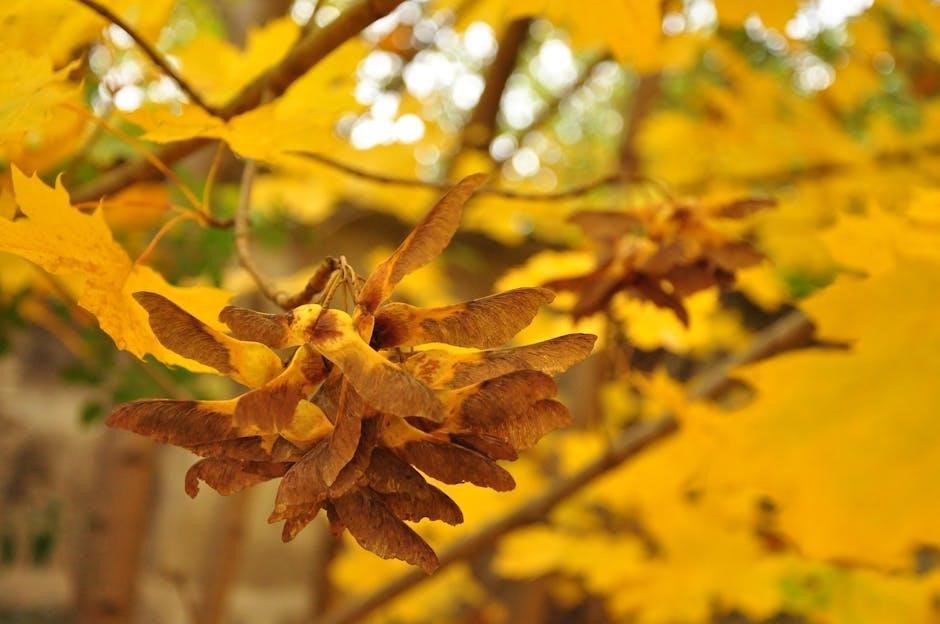
Samaras, often called winged seeds, are a fascinating adaptation for wind dispersal, allowing trees to spread their progeny efficiently. These seeds possess a papery wing extending from the seed body, enabling them to spin and glide on air currents.
Identifying trees by their samaras is relatively straightforward. Ash tree seeds, known as keys, hang in distinctive clusters, while maple tree seeds typically occur in pairs, forming a characteristic ‘helicopter’ shape as they fall.
The shape and angle of the wing, as well as the size and color of the seed, are crucial characteristics for accurate identification. Field maples and Norway maples also produce samaras, adding to the diversity of winged seed types found in nature.
Ash Tree Seeds (Keys)
Ash tree seeds, commonly referred to as keys, are a classic example of samaras – winged seeds designed for wind dispersal. They are easily recognizable due to their unique arrangement, typically hanging in pendulous clusters from the branches.
Each key consists of a seed encased in a papery wing, which catches the wind and allows it to spin as it falls, maximizing its travel distance. These clusters often persist on the tree throughout the winter months, providing a valuable identification feature even after the leaves have fallen.
Observing the size, shape, and color of the keys, along with the way they are clustered, can help confirm the identification of an ash tree. They are a vital part of the ash tree’s reproductive cycle.
Maple Tree Seeds

Maple tree seeds, like ash keys, are also samaras – winged seeds adapted for wind dispersal. However, maple samaras typically occur in pairs, forming a distinctive “helicopter” shape as they fall. This paired arrangement is a key characteristic for identification.
The wings of maple samaras are generally broader and more rounded than those of ash keys, and they often exhibit a more vibrant color, ranging from light tan to reddish-brown. Different maple species can have varying wing angles and seed sizes.
Observing the angle between the wings and the overall shape of the samara can help differentiate between various maple species. These seeds are abundant in autumn, carpeting the ground beneath maple trees.
Nuts
Nuts represent a significant category of tree seeds, characterized by a hard, protective shell enclosing a single seed; Unlike samaras relying on wind, nuts often depend on animals for dispersal, offering a nutritious food source in return.
Identifying nuts involves noting the shell’s characteristics – its thickness, texture, and presence of a cup or cap. The size and shape of the nut itself are also crucial identifiers. Common examples include acorns from oak trees and beech mast from beech trees.
These seeds are typically found in autumn, often scattered around the base of the parent tree. Recognizing nut types aids in tree identification and understanding local ecosystems.
Oak Tree Acorns
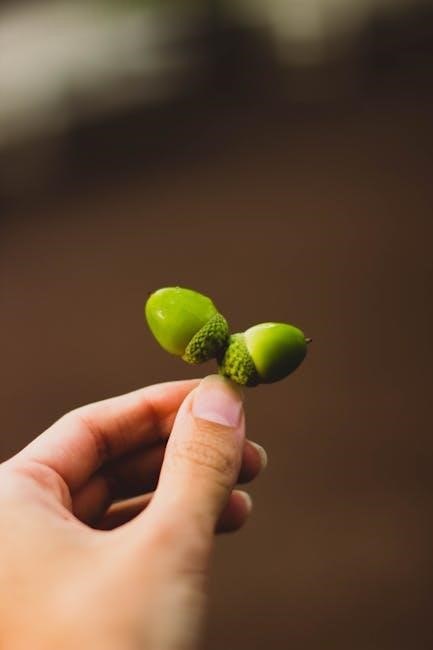
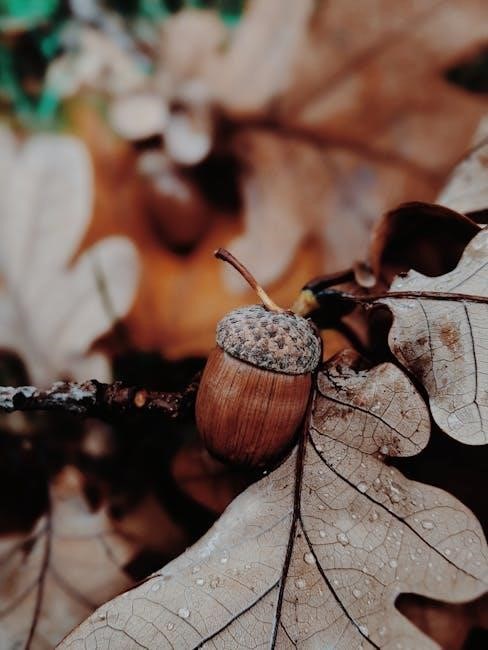
Oak tree acorns are arguably the most recognizable nuts, varying significantly in size and shape depending on the oak species. They consist of a nut enclosed at the base by a cap, or cupule, which is a key identification feature.
Acorn caps can be shallow or deep, warty or smooth, and cover varying portions of the nut. The acorns themselves range in color from light tan to reddish-brown. Observing these details, alongside leaf characteristics, is vital for pinpointing the specific oak species.
Acorns are a crucial food source for wildlife, and their presence indicates a healthy oak population within an ecosystem.
Beech Tree Nuts (Beech Mast)
Beech trees produce small, triangular nuts known as beech mast, enclosed within a spiny, four-segmented husk. These husks are a distinctive characteristic, opening to release the shiny, chestnut-brown nuts. Unlike acorns, beech mast isn’t a single nut with a cap; it’s a cluster within a prickly shell.
Beech mast is an important food source for wildlife, particularly during the autumn and winter months. Identifying beech trees by their smooth, gray bark and elongated, pointed buds aids in locating the mast.
The nuts are relatively small, but abundant, often found scattered on the forest floor in autumn.
Capsules
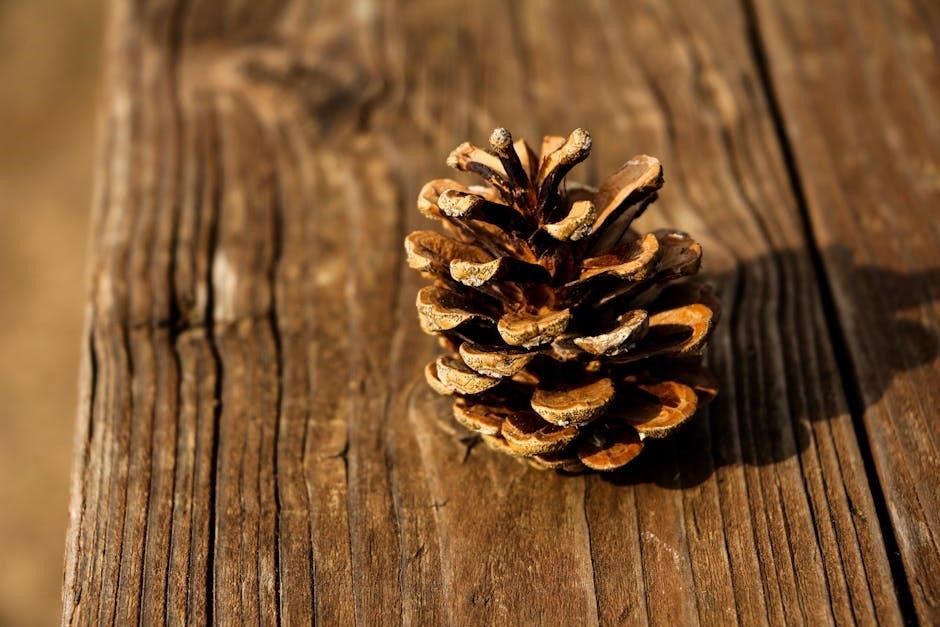
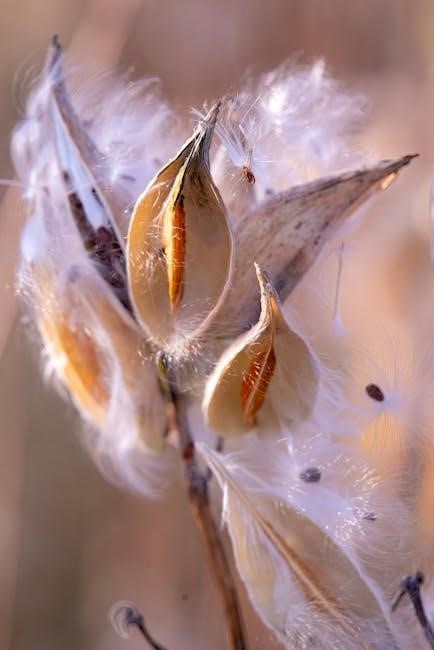
Capsules represent a unique seed pod type, characterized by a dry, multi-chambered structure that splits open to release seeds. Unlike nuts or samaras, capsules don’t typically have wings or a hard shell surrounding each individual seed. They develop from a compound ovary and exhibit diverse shapes and sizes depending on the tree species.
Common examples include sweetgum and magnolia trees, each displaying distinct capsule features. Identifying capsules involves observing their opening mechanism – whether through pores, slits, or distinct sections.
These pods often persist on the tree throughout winter, providing visual interest and a food source for birds.
Sweetgum Seed Pods
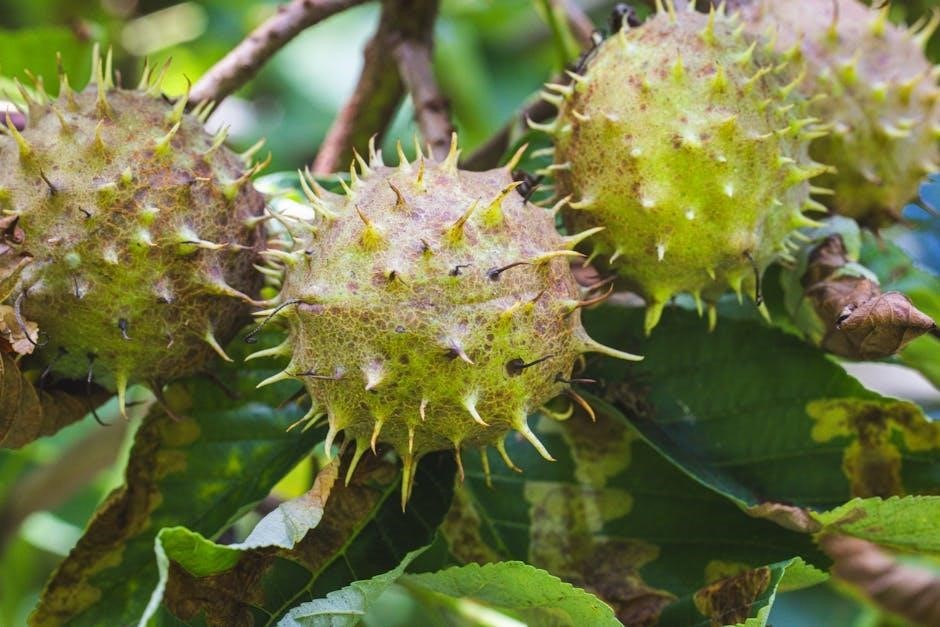
Sweetgum (Liquidambar styraciflua) seed pods are easily recognizable due to their spherical, spiky capsules. These pods, typically around 1 inch in diameter, hang individually from branches and mature in the fall and winter. The exterior is covered in pointed projections, giving them a distinctive, almost star-like appearance.
Inside each capsule are numerous small seeds arranged in radial rows. When ripe, the capsule splits open horizontally into several sections, releasing the seeds.
These pods are often found littering the ground beneath sweetgum trees and can be a bit prickly to walk on. They are a key identification feature for this species.
Magnolia Seed Pods
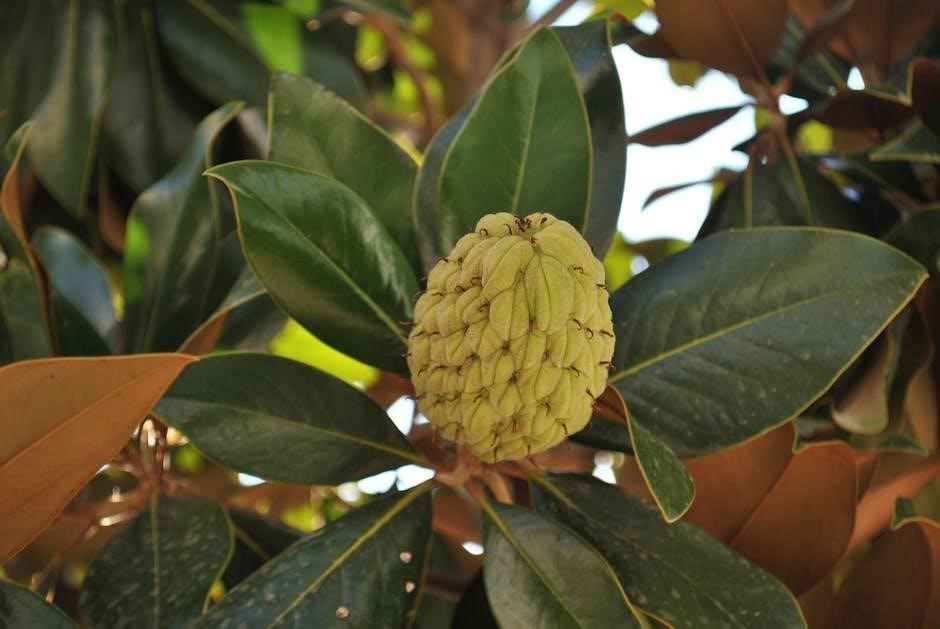
Magnolia seed pods are quite distinctive, developing as aggregated follicles – cone-like structures formed from multiple individual fruits; These pods mature in the fall, typically ranging from 4 to 6 inches in length, and exhibit a cylindrical or oblong shape.
As the pods dry, they split open along their length, revealing bright red or orange seeds attached to a silky, colorful aril. This aril attracts birds and other animals, aiding in seed dispersal.
The seeds themselves are relatively large and dark brown. Identifying magnolia pods relies on observing this unique pod structure and the vibrant seed coloration.
Identifying Seed Pods: Key Characteristics
Successful identification hinges on observing seed pod shape, size, color, texture, and seed arrangement within the pod, utilizing a key for accuracy.
Seed Pod Shape and Size
Seed pod shape varies dramatically between species, ranging from the spherical forms of some nut pods to the elongated capsules seen in sweetgum trees, or the winged samaras of maples and ashes.
Size is equally crucial; acorns, for example, are considerably larger than the tiny seeds found within maple samaras. Observing whether a pod is round, oval, cylindrical, or irregular is a primary step.
Measurements, even approximate, can be helpful. Note if the pod is small (under 1cm), medium (1-3cm), or large (over 3cm). Consider the overall dimensions – length, width, and diameter – to refine your identification process.
Comparing the pod’s dimensions to known characteristics of different tree species is essential for accurate determination.
Seed Pod Color and Texture
Color provides valuable clues; seed pods can be green, brown, reddish, or even gray, often changing as they mature. Observing the hue – whether it’s a vibrant green or a muted brown – is important.
Texture also aids identification. Some pods are smooth, while others are rough, spiky, or covered in hairs. Feel the surface carefully. Is it hard and woody, or soft and papery?
Note any patterns, like veins or ridges. The presence of spines or bristles is a significant characteristic. Consider if the pod feels sticky or resinous.
Combining color and texture observations narrows down possibilities, leading to a more accurate tree seed pod identification. Detailed observation is key!
Seed Arrangement within the Pod
Seed arrangement is a crucial identification factor. Observe how seeds are positioned inside the pod – are they in a single layer, multiple layers, or spirally arranged?
Note the number of seeds per compartment or pod. Some pods hold only one or two seeds, while others contain many. Consider if seeds are attached individually or clustered together.
Examine the seed orientation. Are they aligned lengthwise, crosswise, or randomly distributed? Look for any specialized structures holding the seeds in place.
The pattern of seed distribution, combined with pod structure, provides vital clues. Careful examination of this internal arrangement significantly aids accurate tree seed pod identification.
Specific Tree Seed Pod Identification
This section details identification techniques for birch, elm, and platanus (sycamore/London plane) trees, utilizing key characteristics of their unique seed pods.
Identifying Birch Tree Seeds
Birch tree seeds are notably small and lightweight, housed within distinctive, cone-like seed pods known as catkins. These catkins typically appear in the fall and release numerous winged seeds, facilitating wind dispersal.
Key identification features include the catkin’s cylindrical shape and papery scales. The seeds themselves are very small, often appearing almost dust-like, with a delicate wing aiding in their flight. Observing the arrangement of these seeds within the decaying catkins is crucial for positive identification.
Mature catkins will be brownish and brittle, readily releasing seeds when disturbed. Look for these catkins hanging from the branches, often persisting through the winter months, providing a clear indicator of birch tree presence.
Identifying Elm Tree Seeds
Elm tree seeds are characterized by their unique, papery, disc-shaped wings attached to a central seed. These winged seeds, often described as samaras, develop within small, inconspicuous seed pods that are typically green when young and turn brown as they mature.
Key identification features involve observing the circular wing surrounding the seed, which aids in wind dispersal. Elm seeds are relatively small, and their dispersal pattern often creates a noticeable “snowfall” effect when the trees release them.
Mature seed pods split open to reveal the winged seeds, which are easily carried by the wind. Look for these seeds carpeting the ground beneath elm trees in the spring, a clear sign of their reproductive cycle.
Identifying Platanus (Sycamore/London Plane) Seeds
Platanus seeds, from Sycamore or London Plane trees, are distinctive due to their spherical, fuzzy seed heads. These seed heads, often persisting through winter, are composed of numerous small seeds clustered together, resembling a dense ball.
Key identification features include the characteristic round shape and the woolly texture of the seed head, which aids in seed dispersal by wind. The seed heads hang from long stalks, often remaining on the tree well into the colder months.
Upon maturity, these seed heads break apart, releasing the small, winged seeds. Observing these hanging, spherical structures is a reliable way to identify Platanus trees and their reproductive strategy.
Resources for Further Identification
Explore online keys and field guides for detailed seed identification, utilizing botanical references and virtual publications like the Seed Identification Guide (ISBN 978-1-7753419-0-1).
Online Seed Identification Keys
Numerous online resources facilitate tree seed pod identification, offering interactive keys based on physical characteristics. These digital tools allow users to input observations – such as seed size, color, shape, and texture – to narrow down potential species matches.
The Seed Identification Guide (SIG), a web-based publication, provides a comprehensive virtual resource registered under ISBN 978-1-7753419-0-1. These keys often incorporate detailed images and descriptions, aiding in accurate identification.
Furthermore, botanical databases and university extension websites frequently host identification resources. Utilizing these platforms can streamline the process, especially for those new to seed morphology and botanical classification, offering a convenient and accessible learning experience.
Field Guides and Botanical References
Traditional field guides remain invaluable tools for tree seed pod identification, offering detailed illustrations and descriptive text for various species. These guides often include keys focusing on leaf and seed characteristics, aiding in accurate plant recognition.
The Tree Council provides resources with key identification features for leaves, seeds, and flowers, emphasizing the importance of collecting ripe seed pods before they burst.
Botanical references, such as floras and taxonomic monographs, offer in-depth information on seed morphology and species distributions. Consulting these resources, alongside practical field observation, enhances identification skills and provides a deeper understanding of plant diversity.